|
|
A New England and Eastern Canada Edible and Medicinal Mushroom Resource |
|||||
Home
Chanterelle (Cantharellus cibarius) Black Trumpet (Craterellus cornucopioides, C. cenerius, C. foetidus) Small Chanterelles (Craterellus tubaeformis, C. ignicolor) Hedgehog (Hydnum repandum, H. umbilicatum) Horse and Meadow Mushroom (Agaricus arvensis, A campestris) Parasol Mushroom (Macrolepiota procera) Shaggy Mane (Coprinus comatus) (White) Matsutake (Tricholoma magnivelare) Blewit (Lepista nuda) Oyster Mushroom (Pleurotus ostreatus, P. populinus)
King Bolete (Boletus edulis) Boletus variipes and other. Two Colored Bolete (Boletus bicolor) Maitake (Grifola frondosa) Chicken of the Woods (Laetiporus sulphureus) Dryads Saddle (Polyporus squamosus)
Morels (Morchella esculenta, M. elata) Puffballs (Calvatia gigantea, Calvatia cyathiformis, others) Lobster Mushroom (Hypomyces lactifluorum) Aborted Entoloma (Entoloma abortivum)
Medicinal Mushrooms Maitake (Grifola frondosa) Reishi (Ganoderma tsugae, G. lucidum) Turkey Tail (Trametes versicolor) Chaga (Inonotus obliquus) Artist's Conk (Ganoderma applanatum)
Collecting, Photographing and
Cooking Collecting
Tips Evaluating
Flavor Dyeing Fabrics and Paper with Mushrooms
|
Chicken of the Woods (Laetiporus sulphureus, Laetiporus cincinnatus)
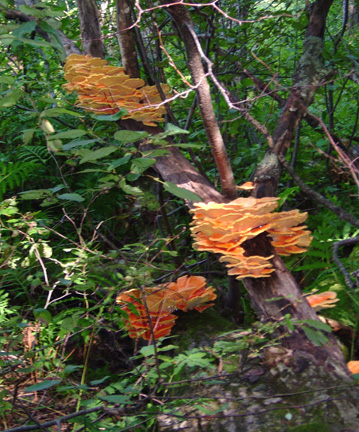
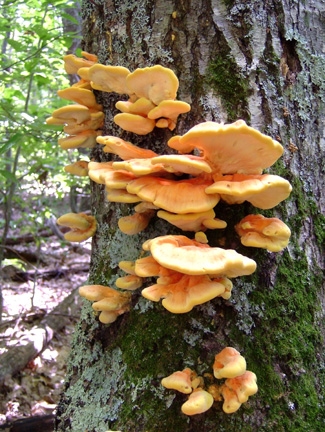
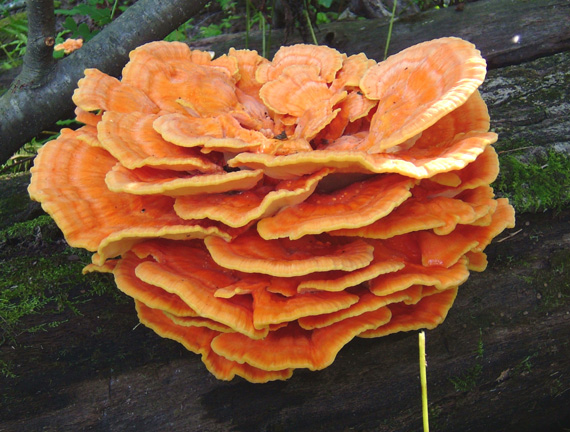
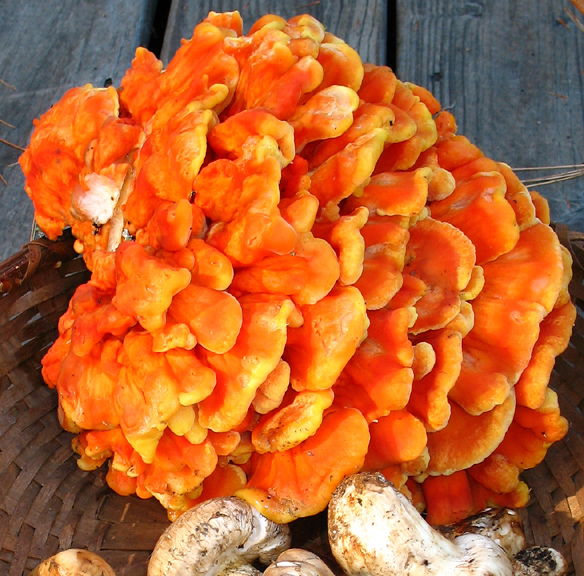
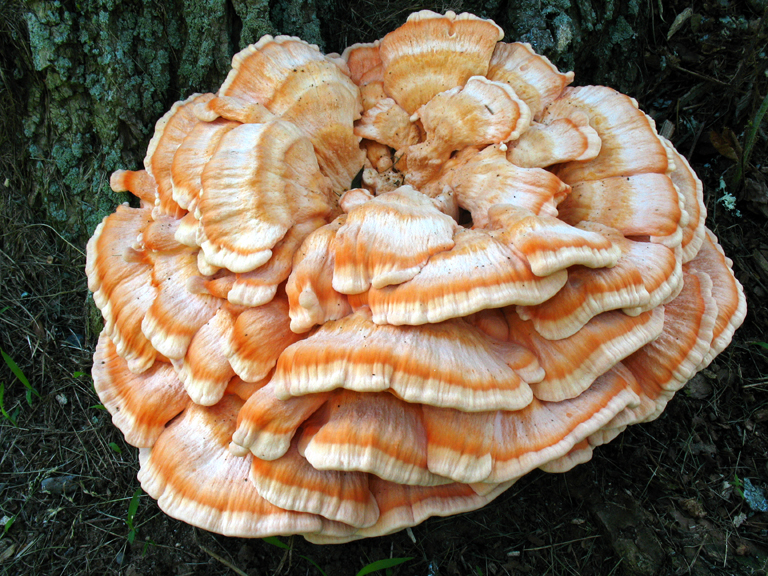
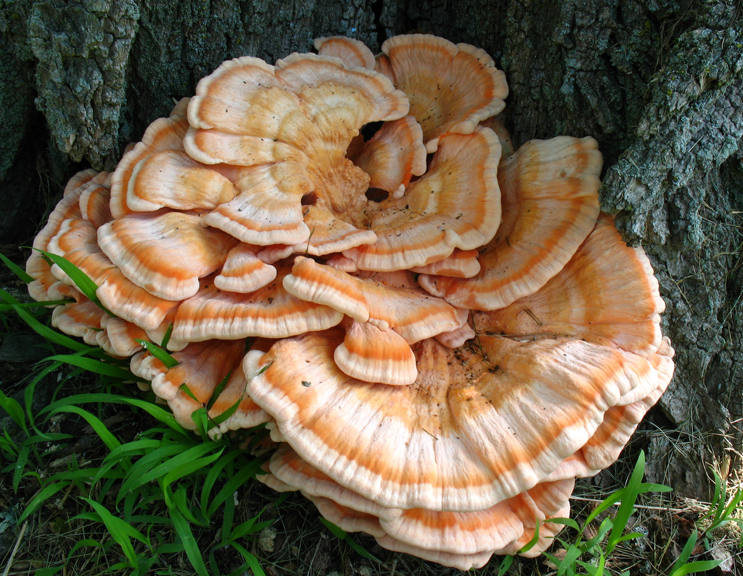
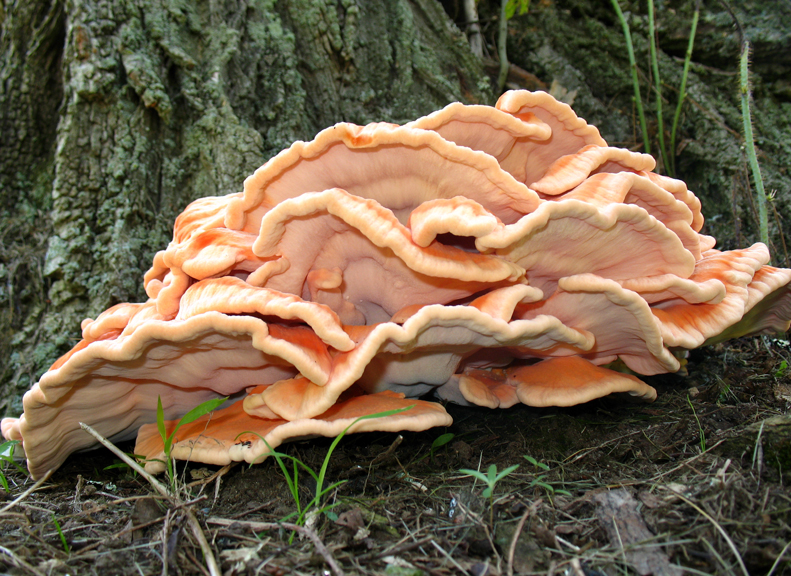
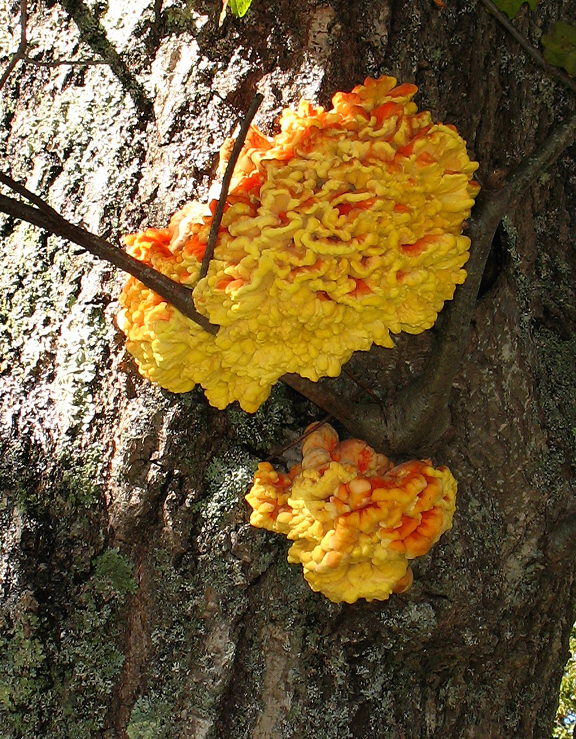
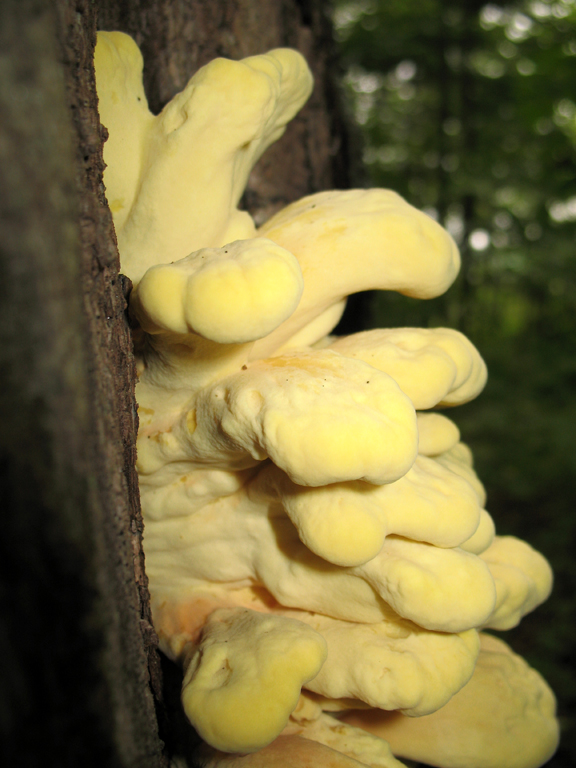
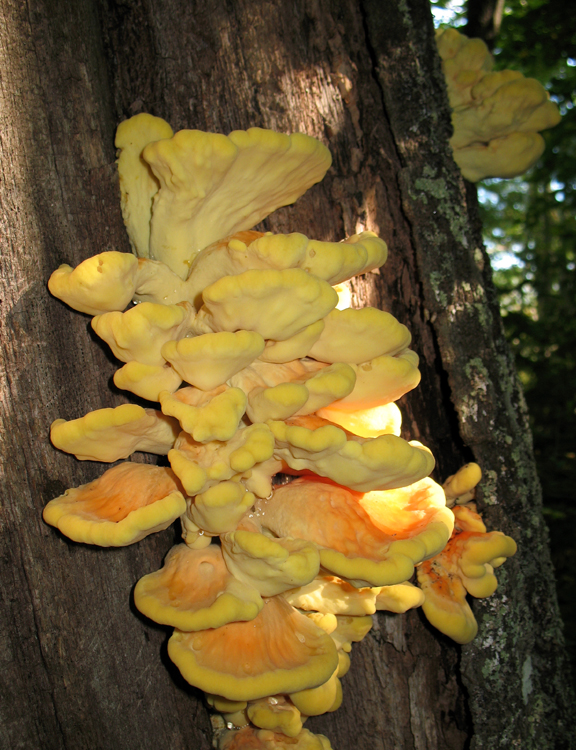
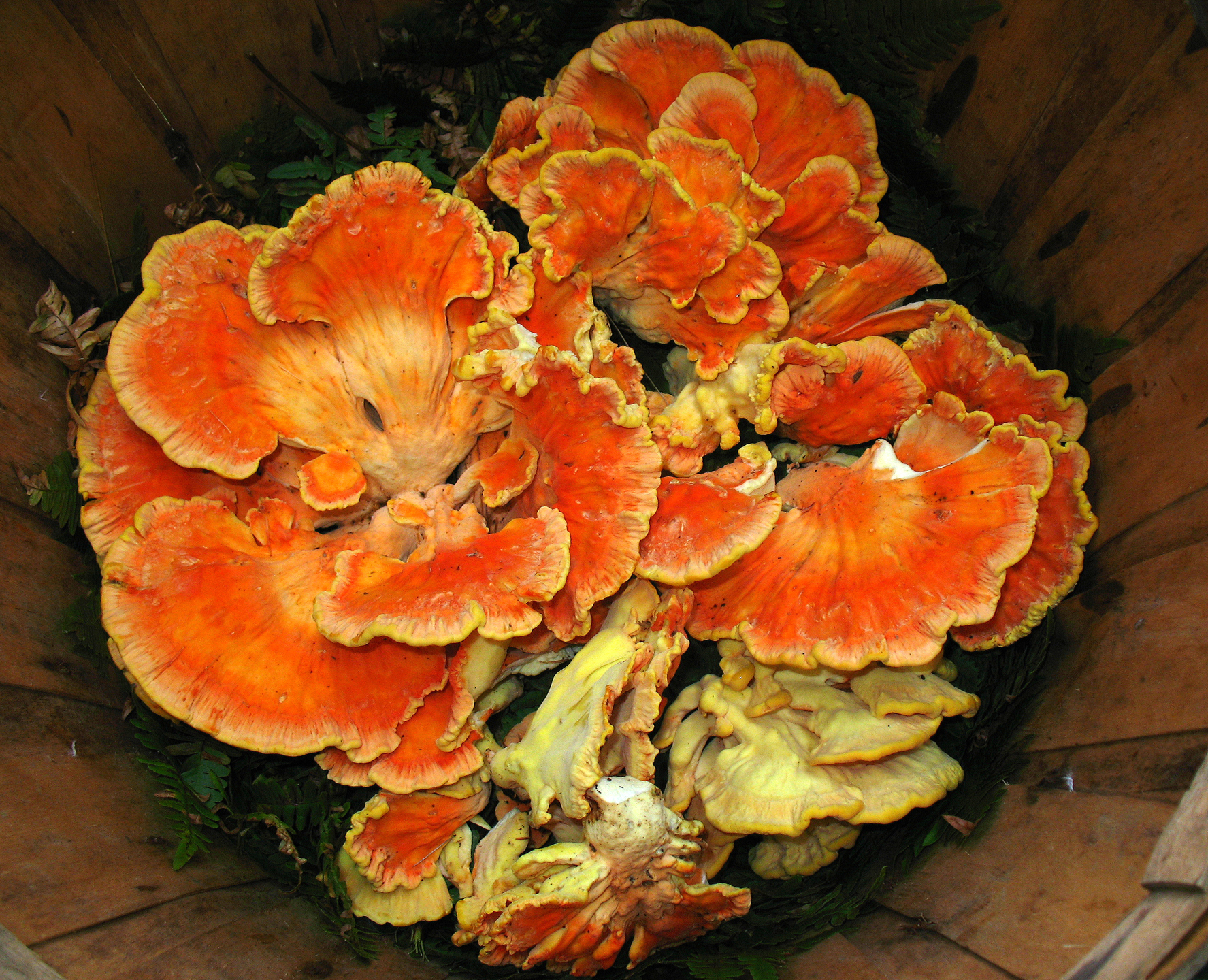
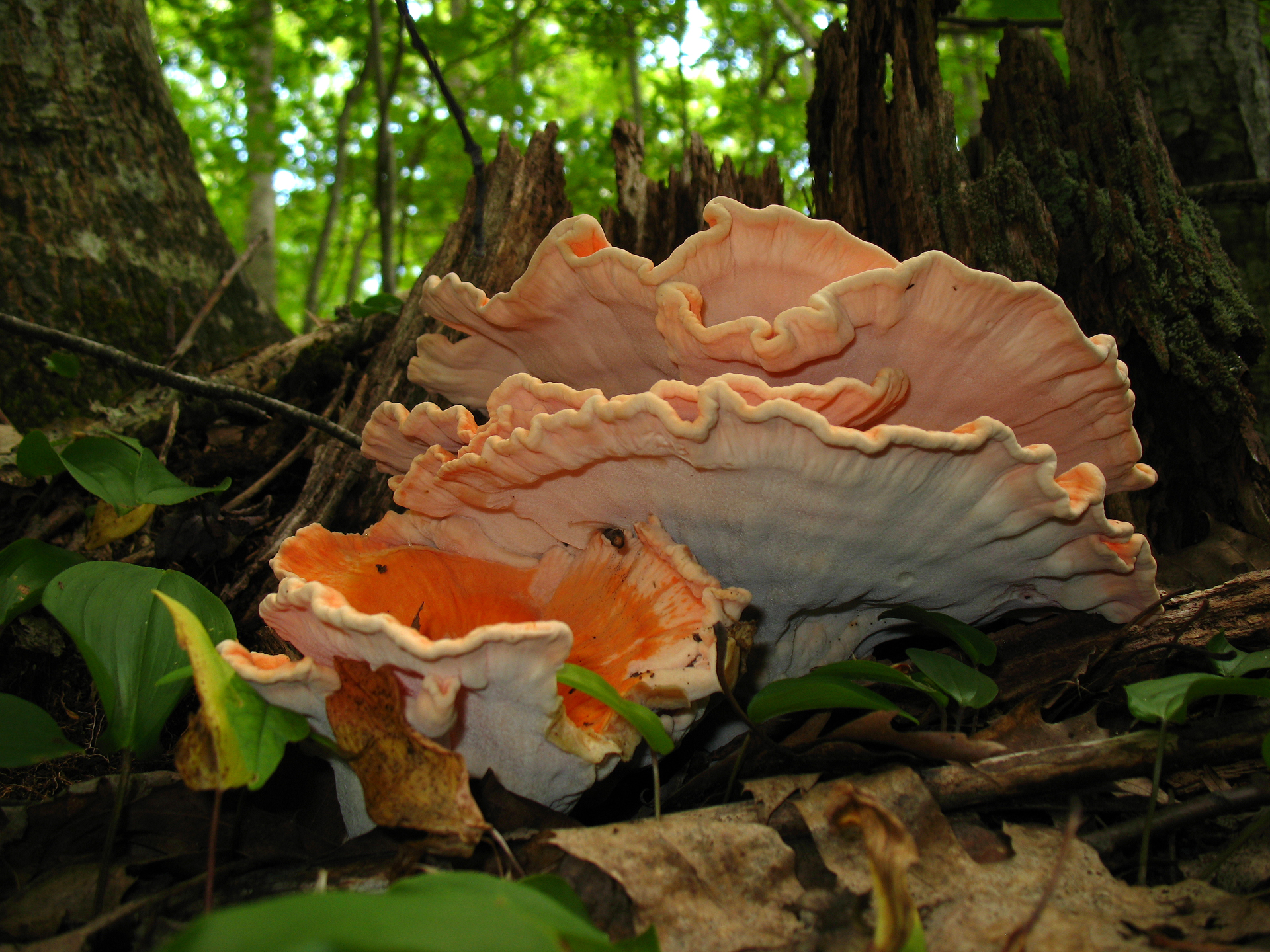
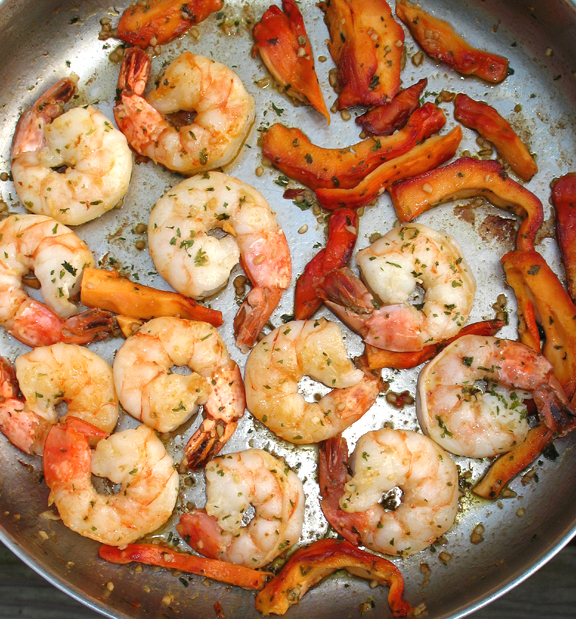
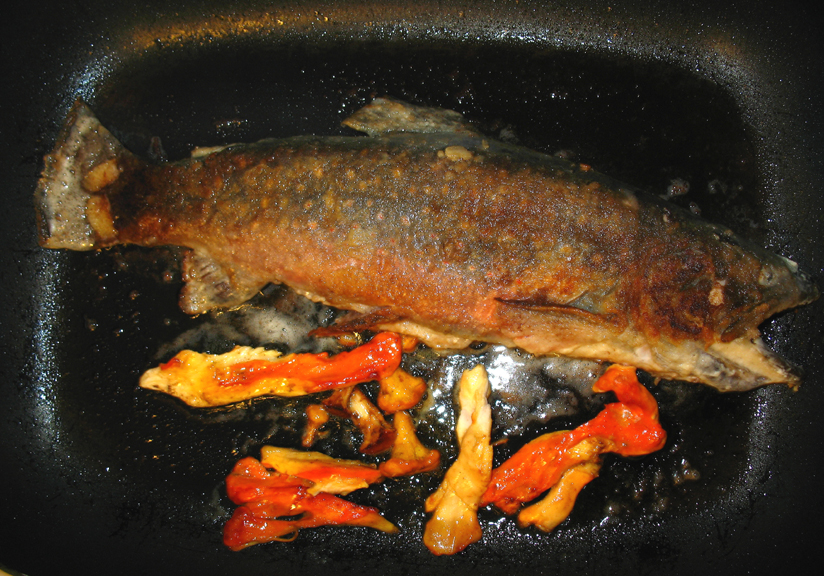
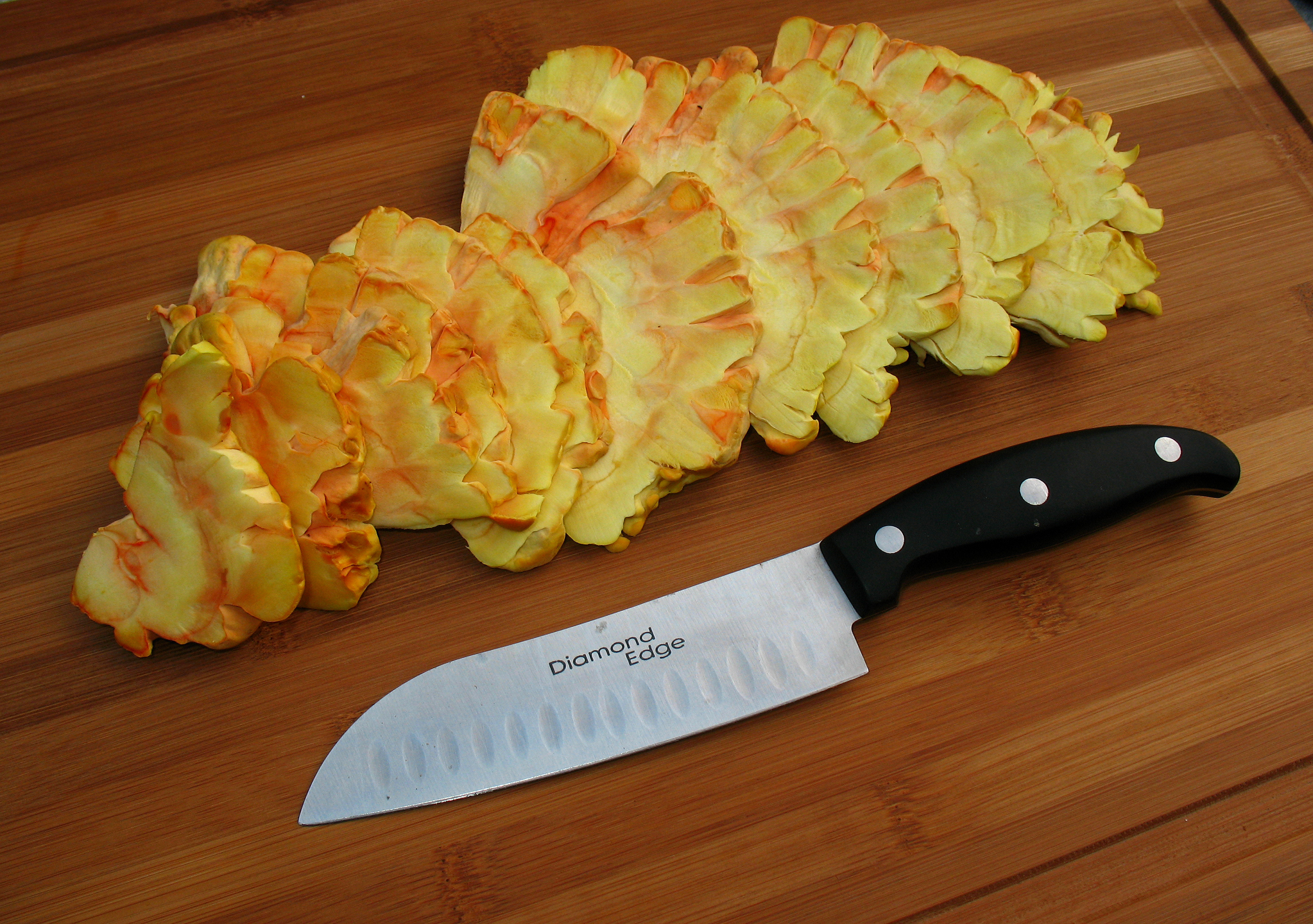
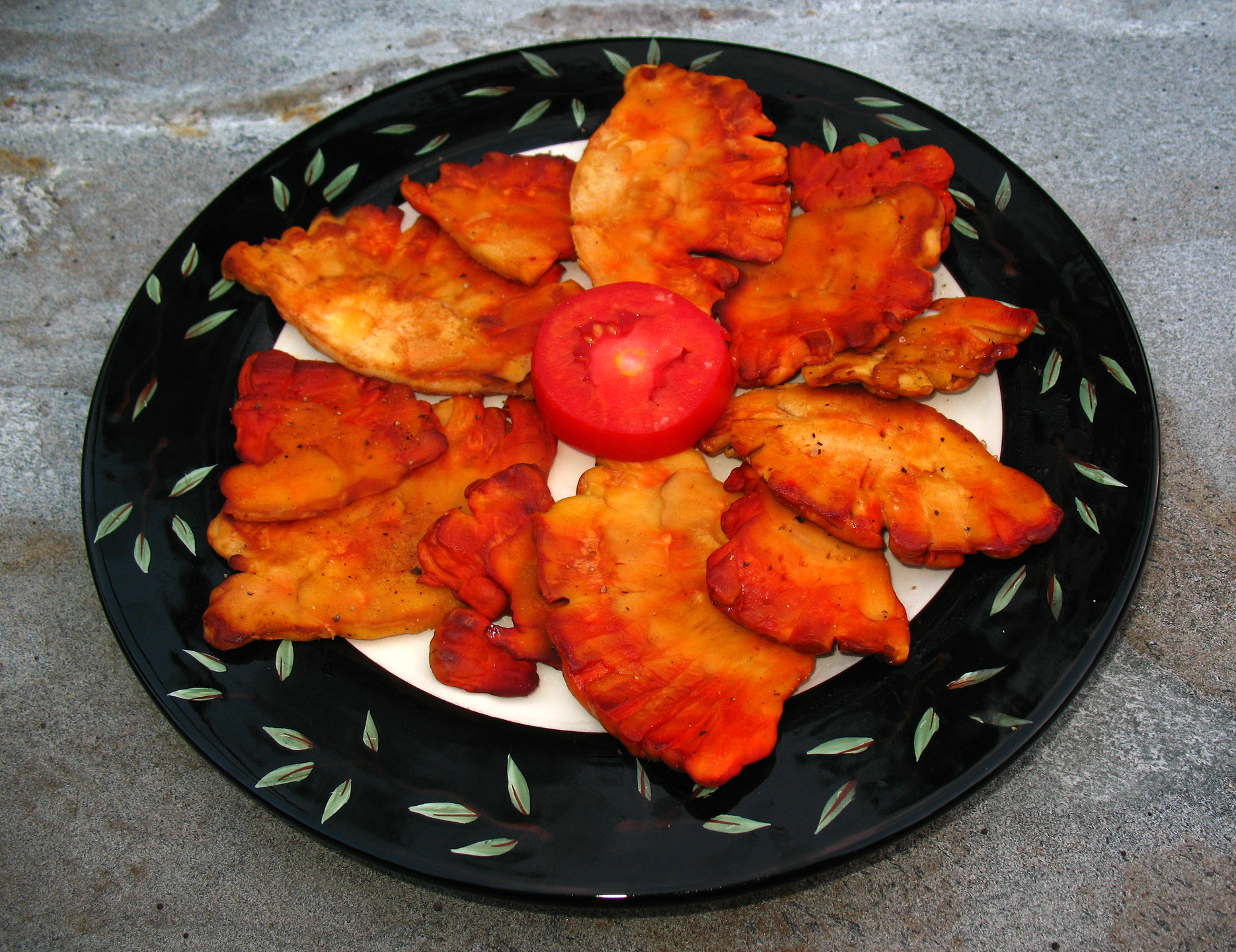
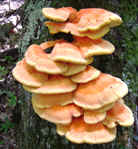
Cap (pileus) 2-20 in across from 1/8 - 1 in. thick. L. sulphureus is bright orange to salmon or orange-yellow on top with a bright yellow margin. L. cincinnatus can have whitish zones on the cap as seen in photos below. L. sulphureus usually are overlapping, fan-shaped flat caps growing as a single shelf or in attached bunches or rosettes on wood. L. cincinnatus tends to grow in a rosette at the base of the tree. The color fades toward whitish tones with age. Both have a pleasant smell. Pores Bright sulphur yellow pores underneath for L.sulphureus. L. cincinnatus has a whitish underside Stem L. sulphureus is usually short or often broadly attached to the wood. L. cincinnatus has a short stem tends to grow in rosettes at the base of the tree or nearby on the ground. Flesh Yellowish white or orangey white. Spores Whitish spore print When and where to find them (ecology) Chicken of the woods are most likely to be found from August through October or later but are sometimes found as early as June. This is a mushroom that is likely to startle you. It is very noticeable from long distance because of it's size and very bright colors. It grows on many types of dead or mature trees with hardwoods such as oak, or beech being more likely than conifers. They grow very fast. Usually when you find it there will be a lot. "Geez, what am I going to do with all this?" Younger specimens can have a large amount of clear watery juice pour out of the fruit body and the wood immediately after cutting. It can run almost like a faucet. Really. That's "wet" collection and a good sign it will be a choice edible. Preparation Chicken of the woods can be one of the most variable mushrooms in terms of edibility. Some collections are great. Some aren't. Don't give up if your first collection is underwhelming. Often with larger specimens, you may only want to use the more tender outer edges of the cap. Be sure to cook them thoroughly. Chickens are good sautéed, deep fried, baked, and may be used in soups. They can have a lemony, chicken-like taste and texture or at least go well with chicken or chicken stock. I freeze them after sautéing. A "wet" collection may not need to be finished with wine, water, or stock. A dry collection likely will. Overcooking can make your chickens dry. In most cases, a technique that adds liquid will be better. If you have ever cooked eggplant and wondered where the oil went, then this will be a similar experience. Finishing your sauté with cream, chicken or vegetable stock, or a white wine such as Riesling is an excellent strategy. Alfredo or béchamel based sauces are hard to go wrong with. Marinating is required for grilling. Chicken of the woods may not be especially good at all if too large or mature. Usually smaller thin caps or thick and knobby caps as they first emerge from the wood are better. Chicken of the woods has an unusual texture that becomes sort of woody with age. How you treat this one can be dependent on the individual mushroom and it's age. There is anecdotal evidence that suggests L. cincinnatus may be more tender than L. sulphureus. A good young specimen can be used in many ways. It can be kept refrigerated for a week or more. Comments A few people have sensitivity to this one so if it is your first time just try a small amount. Chickens found growing on conifers should be treated with more caution and are best avoided. Not everyone likes the texture. Nothing else looks like it. Chickens can be used for dyeing wool, some fabrics, or paper and will yield an orange color with wool when ammonia is used as a mordant.
Find more information here: Laetiporus
sulphureus at MushroomExpert.com
If you like my photography, I have products like tee
shirts, aprons, coffee cups, and other items
available here.
Use of this site will constitute your acceptance of the disclaimer. Copyright 2011 Mushroom-Collecting.com. All rights reserved. |
 Mushroom-Collecting.com